 Kyle Alexandre Struan
01
Hope
The fragile first steps toward reconciliation.
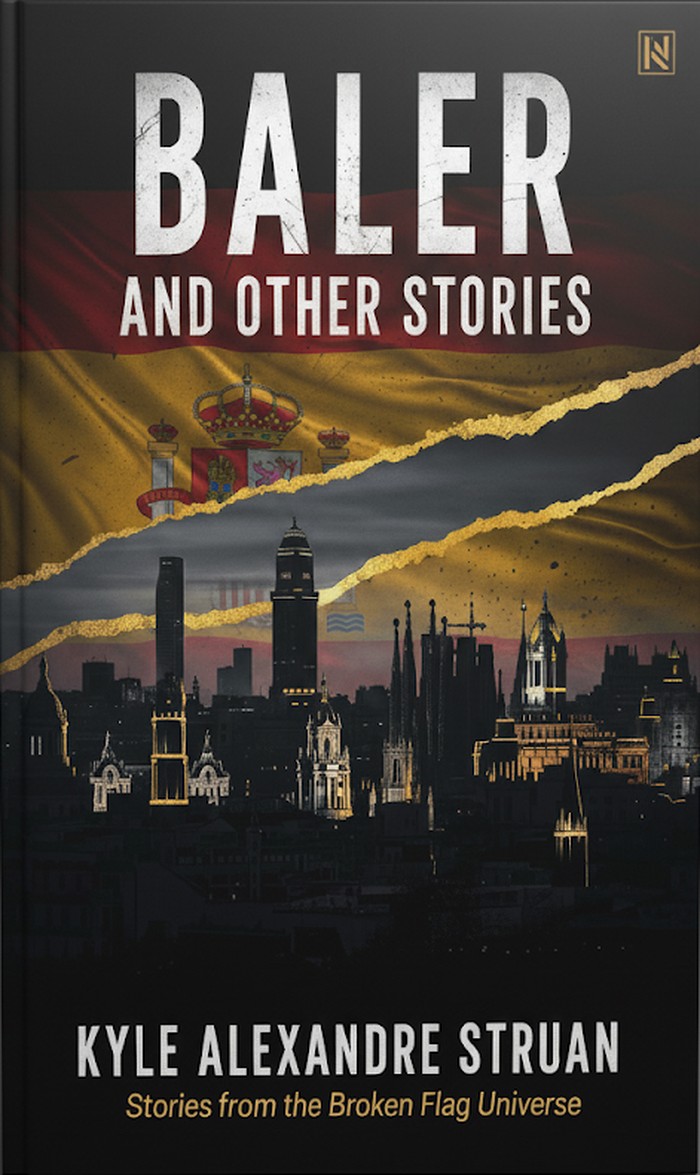
 The Broken Flag · Companion Stories
A nation tears itself apart, and a former waitress makes her last stand with a knife named for one of Spain’s most important sieges. The complete moral arc of a civil war, told by those who lived it.
Set during a fictional modern Second Spanish Civil War, Baler and Other Stories chronicles the complete moral arc of conflict through interconnected narratives that reveal how war transforms everyone it touches.
The collection opens with the brutal selection process that creates elite soldiers and introduces the moral complexity of those who enable violence. At its emotional centre is “BALER. The Line” — where former waitress Isabel makes her last stand, wielding a knife named after one of the most significant Spanish defences in history, embodying a tradition of holding impossible positions.
As the war escalates, the stories trace corruption and institutional breakdown. The latter half examines how bureaucracy becomes complicit in atrocity, how an idealistic officer is led to betrayal, and how technology makes mass killing easy by holding its cost at arm’s length. It closes with “Hope” — the fragile beginning of reconciliation.
Her rifle lay against the wall, empty. She'd burned through every magazine in the running fight through the building — there had been no time to count, no time for anything but movement and fire. Now it was steel and muscle.
In her left hand: the e-tool. Unfolded and locked rigid, the steel blade catching what little light filtered through the corridor. The edge was dulled from months of digging fighting positions, but still sharp enough to crush bone and split skulls. In her right: Baler. Five and a half inches of blackened steel that had never failed her.
Just like the siege. Just like those men who'd refused to yield even when they knew they were going to die. Another impossible last stand, another refusal to surrender the dead to the enemy.